Happy Interdependence Day!

mesh-internetYes, I spelled that correctly.

While we’re celebrating our nation’s history, freedom, and independence this weekend, why not pause to contemplate interdependence as well.

Interdependence acknowledges the connections between us all – that our actions and attitudes affect each other, for better or for worse. We are all in this together.

This past weekend, while teaching a Yin Yoga Teacher Training in Las Vegas, I was reminded of this connectivity as we discussed the anatomy of fascia. Fascia is, in fact, connective tissue! It plays a crucial and largely unsung role in the body, being a stabilizing net for our muscles and joints, helping maintain our structure and hold us in our shape, and even transporting water, hormones, and nutrients through the body, like your own personal internet. Fascia is one reason why a tight calf muscle can contribute to low back pain or achy shoulders, for example. None of our parts work in isolation. Nature is built on interdependence.fireworkswater

In the words of Chief Seattle:

“Humankind has not woven the web of life. We are but one thread within it. Whatever we do to the web, we do to ourselves. All things are bound together. All things connect.”

So, Happy Interdependence Day! (And Happy regular 4th of July, too.)

Jack Kerouac on Simplicity

kerouac_simplicity“One day I will find the right words, and they will be simple.” – Jack Kerouac

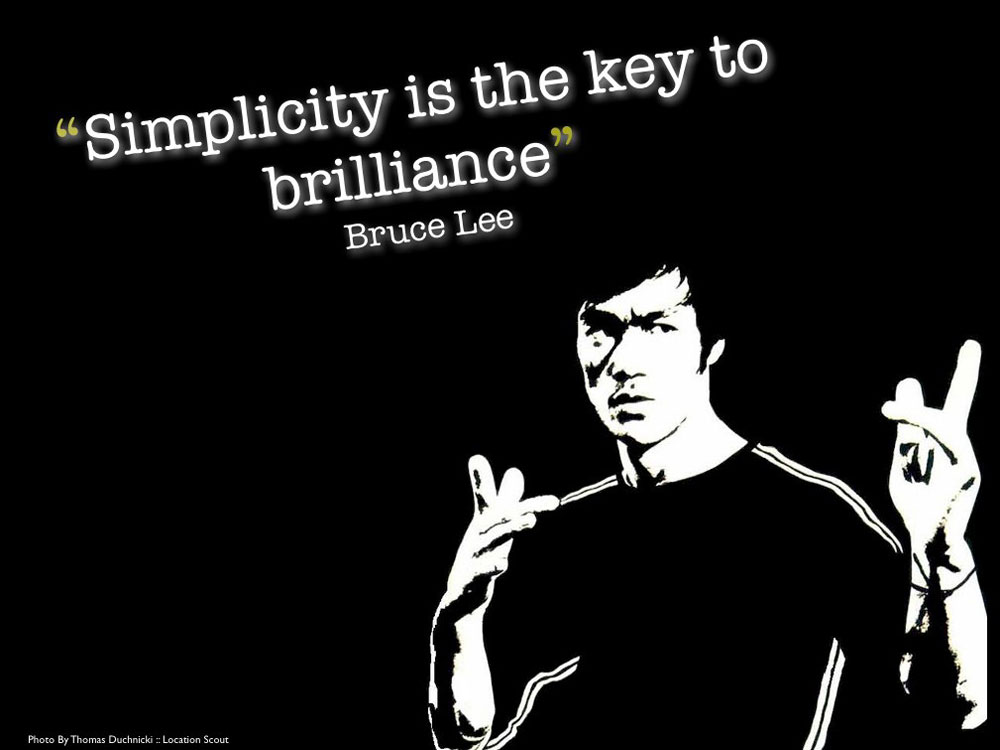
And bonus, Bruce Lee!  Keepin’ it simple. And brilliant.Bruce-Lee-Simplicity-is-the-key-2-brilliance

Simple Does Not Mean Simplistic

In fact, it often takes a great deal of experience to pare things down to their essence. To clear the unnecessary clutter, to silence the extra noise.

simplicity_leonardodavinciMeditation is ultra-simple, but it’s not easy, is it? The same goes for many of the “basic” yoga poses, if we are paying attention.

When something is simplistic, it is trite, shallow, and inauthentic. True simplicity is quite the opposite – it is deep, satisfying, and often profound.

Bells and whistles are nice, but every once in a while, it’s good to let go of complication and embrace simplicity. It feels refreshing.

Yoga that Actually Does Lead to Meditation

candle-royaltyfree_pixabayIf you’ve been reading my blog, you know that my practice centers around doing yoga in a way that really does lead toward meditation.

How many times have you heard that old truism that the purpose of yoga is to prepare the yogi for meditation? Many times, right? And how many times have you been in a yoga class that actually incorporated more than maybe 3 minutes of seated meditation? Not too often, I’m guessing.

I’m not saying that’s necessarily wrong, although as someone who is dedicated to both forms, it does feel like a bit of a disconnect. If you’re like me, you may be wondering how you can integrate meditation into your yoga practice, or vice versa.

I’ve got some tips for you in a recent article I wrote for elephantjournal.com called “3 Ways Yoga Can Help Us Sit More Consistently.” Click the link to read the rest, and enjoy!

Audio Guided Relaxation – Extending the Exhales

breatheThis past weekend, I started experimenting with recording myself doing some of my favorite guided relaxations and breath exercises. I teach these in my yoga classes all the time, so I thought it would be fun to have some of them to share beyond the studio.

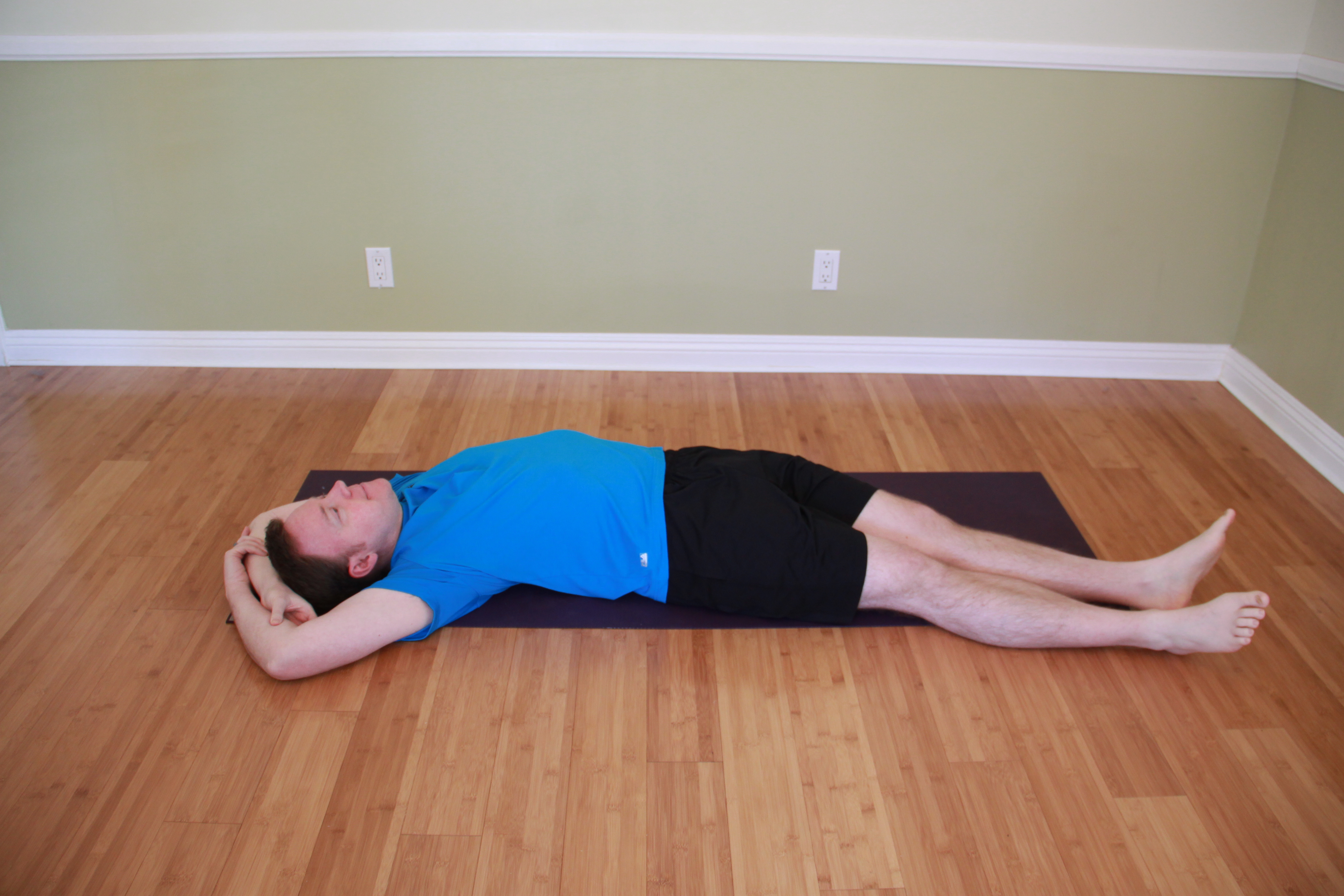
My husband was the guinea pig, and he came into my home yoga space to let me guide him through a few breath exercises while I recorded. I didn’t script these in advance, I just improvised them, because I wanted it to feel like being in a real class.

So, here is one entitled “Extending the Exhales.” This one is especially good to do if you’ve been feeling stressed or overstimulated. Towards the end, it includes the affirmation, “What I need comes to me in the right moment.”

Audio Guided Relaxation – Extending the Exhales

Enjoy and let me know what you think!

P.S. There is another one called “Coming to Center,” which is available on my website for those who are interested in signing up for my “Tips & Inspirations” emails. 🙂

Yes, We Use Props in Yin Yoga!

Recently, I was leading a Yin Yoga teacher training, and one of the trainees shared something with us that really highlights some of the misperceptions out there about Yin Yoga.  She said that she had been emailing with a fellow yoga teacher friend about her plans for the weekend – studying Yin Yoga – and her friend’s response was something like, “Why would you want to do that? Yin Yoga is dangerous.”  Apparently, she had heard that one doesn’t use props in Yin Yoga, and reasonably concluded that it could be unsafe to practice that way. The problem with this assumption is that props are (and should be!) a regular part of the Yin Yoga practice.

2022 Update: Hi everyone – Thank you for visiting and reading this blog post! If you’re interested in more, my current website is movedtomeditate.yoga. I still teach Yin Yoga (with props, of course!), and you’ll find more helpful and inspiring mindful yoga resources there. For example, you might enjoy this Moved To Meditate Podcast episode “Yin Yoga with Props: Is This Even Controversial Anymore?”. Ok, back to the original article! Thanks again for reading. 🙂

My home practice & teaching space, complete with lots of props!

My home practice & teaching space, complete with lots of props!

Somehow this myth that props are not to be used in Yin Yoga has gained a real foothold in the yoga world. I have a few theories. One is that some Yin teachers downplay the use of props in order to make the distinction between Yin and Restorative. Personally, I think there are more substantial differences between the two styles, as I wrote about here. Secondly, flexible people are often drawn to Yin Yoga, and they may need fewer props, so Yin may have become associated with how the practice looks when really bendy yogis do it. Third, Yin Yoga can attract certain yogis that we could lovingly describe as “sensation junkies” (no offense intended if you have tendencies in this direction). For some, it is difficult to back away from that really strong edge of sensation, especially if they dig that strong stretch, but in actuality, this is a very YANG way to practice YIN yoga. For them, using props changes the practice, because they will have to learn to love the pose with a little less emphasis upon intensity.

In case you don’t want to take my word for it, here’s some advice from Sarah Powers, who is one of the originators of Yin Yoga, along with Paul Grilley.  She writes,

“There are three main tenets that help nourish the joints in a yoga pose. The first is to come into the chosen shape to an appropriate edge. This means coming into poses nonaggressively and sensitively, allowing the breath to remain slow and unlabored so we can detect the appropriate depth of sensation that we feel we can tolerate. If we attempt to take on too much intensity too soon, our inner state – or mood of resistance – will actually hinder the chi flow, causing more energetic disruptions…If we are working on an area that is fragile, injured, or hypermobile, we need to do two things. First, we should merely suggest the shape, coming into the pose just enough to stimulate chi flow without any feeling of strain. Second, we need to remain highly focused on the sensations promoted by the pose, thereby refining our meditative attention, while relaxing the rigidity around the painful joint. Of course, we may also need to use props; allowing for modifications and variations to support damaged or destabilized areas.” (p. 25 Insight Yoga)

So, there you have it! Certainly, when I’ve practiced with Sarah Powers and Bernie Clark, both are proactive about offering props to students. This idea that props are forbidden in Yin is not coming “from the top,” so to speak. And, while Sarah is mostly talking to those with injuries here, by extension, props can be an important ally in preventing injury. This is especially important for those with less flexible bodies – the props actually allow the average student to gradually and safely grow more flexible.

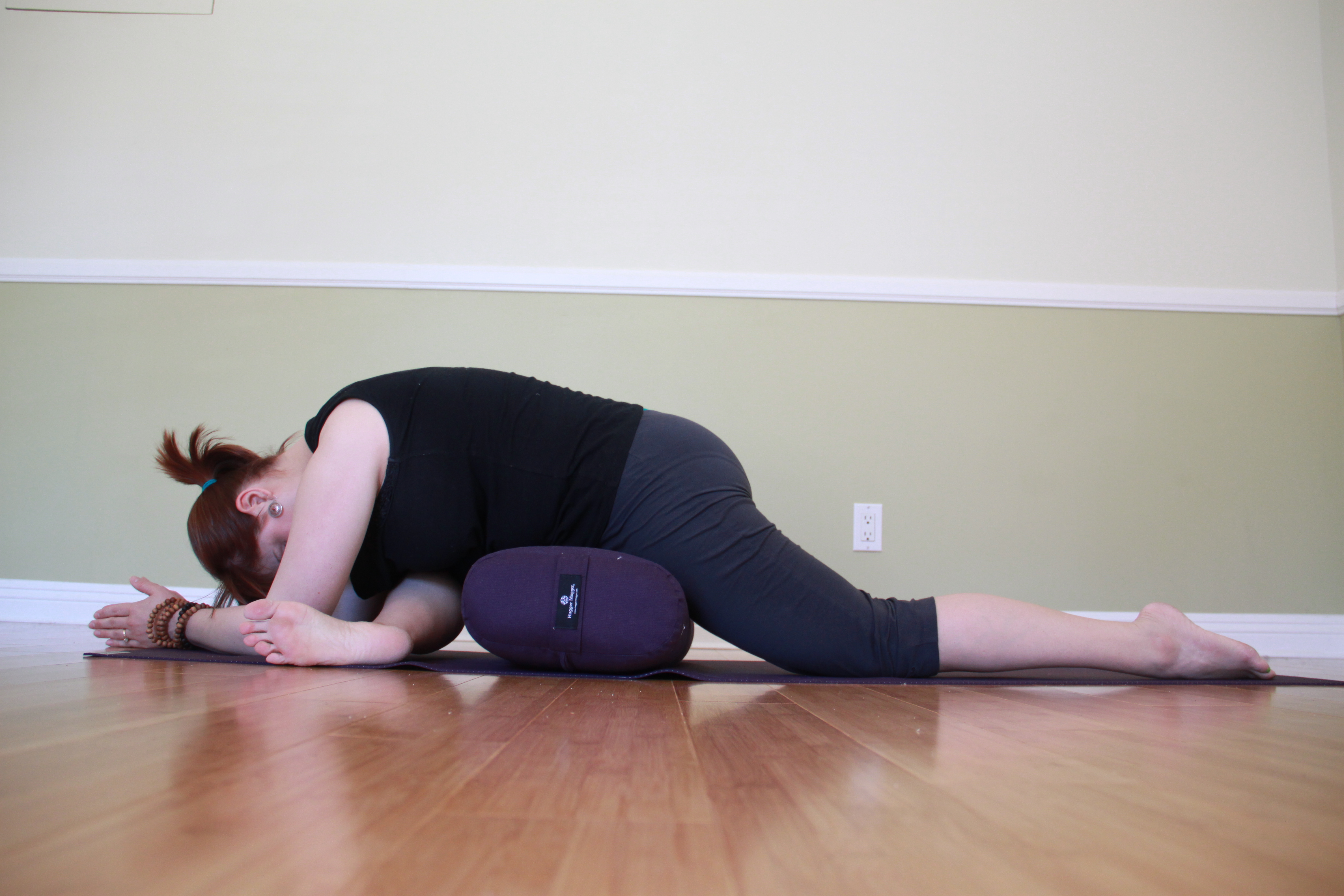
Practicing Swan Pose on a bolster can help make it more accessible, especially for anyone with knee issues.

Practicing Swan Pose on a bolster can help make it more accessible, especially for anyone with knee issues.

Also, consider this – one of the main principles of Yin Yoga is to hold the pose without muscular tension around the target area of the stretch. The theory behind Yin Yoga has always been that this helps us to work with the connective tissues more, rather than only stretching the muscles. So, if a student’s body is resisting a pose due to inflexibility, and is in essence, “propping” itself rigidly in space, how can that student practice the pose with disengaged muscles? In order to correctly practice Yin Yoga, this student needs prop assistance, or they will never be able to release the muscles, relax the nervous system, and gain new flexibility. The prop is hugely helpful in creating the conditions to allow a passive and thorough stretch in this situation.

Most of the students I teach are not super flexy yogis. They have real lives, real jobs, and real aches and pains. Not using props might work out OK if you are a 20-year-old gymnast (I was one once), but then again, it may tend to reinforce the muscle imbalances you already have, making you more flexible where you’re already loose and ignoring your tighter spots. This is one reason why I practice with props in my own personal Yin practice. It allows me to be more precise in where I am receiving the stretch.

Because I love lists, here are my six favorite reasons to use props in a Yin practice:

1) Make a passive stretch possible by avoiding muscular “propping.”

2) Ensure safe alignment.

3) Make the pose sustainable for several minutes.

4) Make it possible to experience the pose as a meditation, rather than distracting the mind with red-alert nuclear levels of intense sensation.

5) Practice with an appropriate amount of sensation (oops, did I say it twice?) to avoid overstretching.

6) Allow the pose to target the intended area of the body.

It is possible to overstretch…which is not very yin-like! Overdoing of any kind is missing the point of a Yin style practice. And, when we’re holding the poses for a long time, as we do in Yin, it is important that we’re in a good place. Otherwise, we could be creating imbalance, or harming our ligaments. (I’ll write more about the ligaments one of these days – talk about another area of misunderstanding in Yin Yoga!)
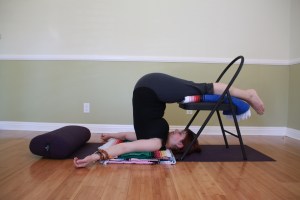
This is my favorite way to practice Snail Pose.

This is my favorite way to practice Snail Pose.

If you come to my class, I’m not going to force you to use a prop, but I will point out when I think a blanket or a bolster would be helpful. Not all students need a prop in all poses, and the point is not the prop for the prop’s sake. The point is accepting support when you need it. Most people are not flexible enough to practice Yin Yoga effectively without some support. Don’t struggle endlessly with the pose, or spend your time hanging out in a place of pain or potential injury. Work creatively with props as a part of your self-compassion practice, and embrace the support. You might soon discover that the kinder, gentler approach brings more lasting change to your body.

I’ll leave you with some more advice from one of the leading Yin Yoga teachers. Here’s a post from Bernie Clark about using props in Yin Yoga, including a helpful video explaining some of the ways you can employ blankets, bolsters, chairs, and more. Enjoy!
Yin Yoga for Runners

Well, I’ve been back from my meditation retreat for a few days, and I’m still re-learning how to do this “every day life” thing.  It was a wonderful experience, and it’s still with me.  I’ll write a reflection or two about the retreat soon.

In the meantime, my friend and fellow yoga teacher, Erika Hall, recently asked me to write something for her newsletter about how Yin Yoga can benefit runners.  She specializes in yoga for these athletic types, so I put together five of my favorite yin poses for runners to try.  Here it is!

Erika: Boy have I been loving Yin Yoga lately. With the intensity of my daily training, Yin Yoga offers a perfect gentle balance while increasing my flexibility and stretching my tight muscles.  I know  A LOT about yoga, but even the teacher needs to take a class. When I do, I seek out Addie deHilster of TheraYoga. It is my pleasure to introduce you to my first guest contributor ever, Addie deHilster, my go-to Yin Yoga Guru. Addie happily agreed to compile her list of Top 5 Yin Yoga Poses for Runners and share it with us.  I’ll let Addie tell you more about it…

Addie: Runners are used to moving fast, so it may be a little counter-intuitive that you can benefit so much from a decidedly slow practice like Yin Yoga.  It might sound like a paradox, but spending a little extra time relaxing in a few Yin poses can often increase your flexibility more quickly than doing lots of active poses.

Yin Yoga is a soft and mellow approach to yoga.  In this practice, we hold most poses for 3-5 minutes at a time, gradually and thoroughly stretching the body.  Science has shown that it takes at least 90 seconds to begin to stretch the connective tissue, known as fascia, that surrounds our muscles.  If you have tight fascia surrounding your muscles, you’ll be limited in how much you can improve your flexibility.

The following are five of my favorite Yin Yoga poses for runners.  I recommend practicing Yin postures on your off days from running, or after a run for some wonderful recovery time.  Slow down for a while and enjoy these, and your muscles and fascia will thank you!

cattail3, cropped1) Cat Tail Pose: This is a great stretch for the quadriceps and hip flexors. Lie on your right side and rest your head on your arm, or a blanket place on top of your arm. Take your top leg and extend it out placing the foot on the floor in front of you to stabilize the body. Then, bend your bottom knee and reach back to hold the foot in your hand.  Gently pull your heel toward your seat with a steady, but relaxed, pressure.  Stay here for 3 minutes.

cattail4, croppedBefore going on to the second side, you can take this into a delicious twist.  Loosen your grip on the bottom foot, then roll your top shoulder back toward the floor.  Let the body shift back and settle into the twist for another 2-3 minutes.  Repeat on the other side.

banana12.) Bananasana: This pose stretches out the entire side of the body, including the infamous IT Band!  Lying on your back, walk your straight legs together over to the right. Keep the pelvis level. Then use your elbows to walk your torso over to the right, forming a C-shape “banana” curve. You can take the arms overhead and clasp opposite elbows, or just place one hand on the belly, one hand on the chest. Rest here and breathe into the gradual stretch for 3-4 minutes, then change sides.

rack13. Hammock Pose (aka “The Rack”): The biceps are an overlooked tight spot for most runners – while you’re running, you’re holding the biceps in a flexed position for an extended amount of time!  To practice the Hammock, start sitting with your knees bend and feet on the ground, taking your hands behind you and pointing your fingers toward your seat.  Lift your hips as if going up into a tabletop position, then shift your hips forward toward your heels and sit back down again.  Keep the elbows bent and pointing behind you.  Breathe calmly here for up to 2 minutes.

eyeofneedle44) Eye of the Needle Pose: This is an excellent stretch for the outer hip, especially the Piriformis.  Another fun variation of this pose is to practice it with the foot on the wall, rather than held by your hands.  To come into Eye of the Needle, lie on your back with your knees bent and feet on the floor.  Turn your right leg out as you bring it towards your chest, crossing the right ankle over the left thigh.  Bring both legs in towards the torso, and reach your right hand between the “window” of the legs.  Hold onto the back of the thigh, still keeping your shoulders, neck, and head relaxed.  Be here for 3-4 minutes on each side.

suptapad15) Supta Padangusthasana with Strap: This pose will give you a nice release along the entire back of the leg, from calves to hamstrings.  Loop up a long yoga strap and place it around your torso at the upper ribs, right under the arms.  Bend your right knee to slip your foot into the strap, then straighten your leg.  The leg may be at less than 90 degrees to the torso, which is fine.  Having the strap around your torso creates a “hands free” version of this pose, which is more relaxing for your upper body.  Take 3 minutes with the leg in this position, then you can keep your foot in the strap and tilt the leg out to the right.  Let the strap help hold your leg in place, stretching the inside of the leg for about 2 minutes.  Lastly, bring the leg back up through the center and across the body a few inches until you feel a stretch along the outer leg, hip, and IT Band.  Spend another 2 minutes here.  Then change sides.

You will need a 10-foot yoga strap for practicing this pose with the strap around your torso, but just in case you only have shorter straps around (or say, the belt of your bathrobe), you can simply loop the strap onto your foot and hold it in your hands.  The great thing about stretching your legs from a reclining position is that it helps recirculate blood and fluids from your feet and lower legs.

Bonus – Legs Up the Wall Pose: If you have time and wall space, resting with your legs up the wall is fantastic for refreshing those tired feet!  Five minutes here will help you recover from miles of pounding the pavement.

And then, Erika kindly mentioned my upcoming Yin-related events (in case you’re in the LA area!):

  • Weekly Yin Yoga class – 6pm Friday evenings, TheraYoga (Montrose, CA)
  • Yin Yoga Workshop: “Slow is the New Fast” – Sunday, Feb 9, 2:00-4:30, TheraYoga.  Learn how slowing down your practice can give you a more thorough stretch and improve your flexibility faster!  More info.
  • Yin Yoga Weekend Immersion & Teacher Training – March 14-16 at TheraYoga.  Open to current and aspiring yoga teachers, as well as enthusiastic students who wish to spend the weekend immersed in all things Yin!  More info.

Here’s the link to the original article on Erika’s site.  Enjoy!

Differences Between Yin & Restorative Yoga

When I first discovered Yin Yoga several years ago, I was drawn to it because it seemed to provide a bridge between my yoga practice and my meditation practice like nothing else had before.  Since I’ve been immersed in Yin (and have trained in Restorative, too), I’ve noticed that people often wonder – what’s the difference between Yin and Restorative?

addie upavistha photoshoot, squareOn the surface, they look similar.  Both are very mellow yoga practices done primarily on the floor, using plenty of props and holding the poses for minutes at a time.  Both styles can have incredible stress-relieving benefits, and the repertoire of poses even overlaps somewhat.  But, they are not the same!

In my observation, one of the main distinctions is that in Restorative, one is encouraged to rest both physically and mentally. In Yin, the poses are approached more like meditation postures, keeping the mind more alert and present, avoiding zoning out, so we can cultivate mindfulness. This is absolutely not meant as a criticism of Restorative.  I love both, and think there’s a time for rest and a time for meditation.  But, this aspect of mindfulness in Yin Yoga (especially as taught by Sarah Powers) is the main reason I first fell in love with it.

Along with the mental alertness, Yin Yoga also embraces a bit more sensation in the poses, stretching to a sustainable edge.  In Restorative, the objective is not so much to stretch, but to gently open the body and breath while balancing the nervous system.  I’ve heard people say that the difference is that Restorative uses props (like bolsters, blankets, blocks, etc.) and that Yin doesn’t.  I passionately disagree with that!  (I explain more about props here.)

Back to the topic at hand, Yin Yoga also works with the energy body in some specific ways that are different from Restorative Yoga. “Yin” and “Yang” are Taoist terms, alluding to the fact that Yin Yoga draws upon wisdom from Traditional Chinese Medicine, using the stretches to stimulate the movement of Chi along the body’s energy meridians.

Lastly, the repertoire of Yin Yoga poses mostly favors the legs, hips, lower body, and spine (though not exclusively). Restorative Yoga, on the other hand, is full of delicious supported backbends.  But, this is also where I tend to mix the two styles together in my teaching and practice.  Those bolster backbends are a great way of including the upper body meridians in the Yin practice, and I believe that if you practice them with the same vibrant attentiveness as any other Yin pose, then they fit seamlessly within your Yin practice.

Namaste!